

Medical Radiation Sciences
729
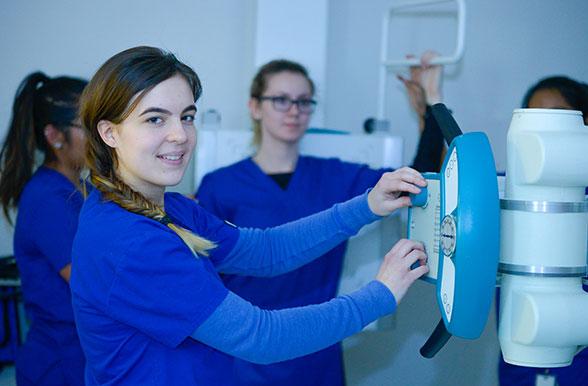
Overview
Please note that you must apply via the Ontario Universities' Application Centre (OUAC) (opens new tab).

The Mohawk College and McMaster University Medical Radiation Sciences (MRSc) Program is a collaborative diploma-degree program. MRSc program graduates are health care professionals who employ different prescribed forms of energy including radiation and sound waves, to aid in patient diagnosis and therapy and are part of one of the fastest growing health care fields. In recent years innovations in information technology, digital imaging and instrumentation have made MRSc one of the most advanced, specialized and dynamic areas of health care today. This program will provide in depth training of technical, patient care and communication skills. The attainment of both an Ontario College Advanced Diploma and a Bachelor of Medical Radiation Sciences is achieved through a fully integrated program offered jointly through Mohawk College and McMaster University. This program will allow students to specialize in one of the health science disciplines of Radiography, Ultrasonography or Radiation Therapy.
Visit the The College of Medical Radiation and Imaging Technologists of Ontario (opens new tab).
View the Sessional Dates by Term for start dates and semester break information.
Program Highlights
- The students graduate with an Ontario College Advanced Diploma and an Honours Bachelor of Medical Radiation Sciences.
- Reap the benefits of a fully integrated program offered jointly by Mohawk College and McMaster University. At the end of a common first year of study, students apply to specialize in Radiography, Ultrasonography, or Radiation Therapy.
- Radiography: Includes discipline-specific courses in radiation physics and safety, radiation biology, human anatomy and pathology, radiographic equipment, radiographic imaging procedures, image analysis and image interpretation, and introduction to computed tomography (CT scanning).
- Ultrasonography: Includes discipline-specific courses in ultrasound physics and instrumentation, human anatomy and pathology, abdominal, obstetrical and pelvic, musculoskeletal and vascular procedures, patient care and safety, and pediatric sonography.
- Radiation Therapy: Includes discipline specific courses in radiation physics and safety, radiation biology, human anatomy and pathology. Focuses on the uses of radiation, such as x-rays, gamma rays, electron beams or protons, to kill cancer cells or damage them so they cannot grow or multiply.
- Selection to year two is by committee (with emphasis on GPA). Students are not guaranteed their first choice of specialization.
- Students will be required to participate in three clinical placements to complete their learning. These placements offer a rich environment for students to learn about their professions and prepare for their future career. It is important to note that clinical placements are not guaranteed to be local, and students may be required to relocate. Clinical placements may not be accessible by public transit.
- This Medical Radiation Sciences program has been granted accreditation status and allows graduates to write the professional registry exams.

- The Mohawk College McMaster University collaborative Medical Radiation Sciences Advanced Diploma/Honours Bachelor of Medical Radiation Science degree program is accredited with Accreditation Canada's EQual program.
What you'll learn
- Discover the wonders of the human anatomy through x-rays and diagnostic ultrasound.
- How to safely and effectively operate specialized medical imaging and treatment equipment.
- How to collaborate with fellow health care professionals while providing optimal care to patients.
- Functional demands: the Medical Radiation Sciences health profession is an intellectually, emotionally and physically demanding career. It is important that applicants become familiar with the profession(s) before entering the program so that they are able to function at an acceptable standard. Visit the Government of Ontario website and the Government of Canada Website to read more.
- Students are introduced to the 3 specializations in the Level 1 course MEDRADSC 1F03.
Program Length
4 years (academic and clinical experience)
Course Overview & Descriptions
Program of studies (POS) for the Medical Radiation Sciences Advanced Diploma & Degree program
All programs include blended learning which integrates both face-to-face learning and online learning in the delivery of a course. Find out more about blended learning.
Radiography Specialization
Includes discipline-specific courses in radiation physics and safety, radiation biology, human anatomy and pathology, radiographic equipment, radiographic imaging procedures, image analysis and image interpretation, and introduction to computed tomography (CT scanning), magnetic resonance imaging (MRI), or breast diagnosis and treatment.Ultrasonography Specialization
Includes discipline-specific courses in ultrasound physics and instrumentation, human anatomy and pathology, abdominal, obstetrical and pelvic, musculoskeletal and vascular procedures, and patient care and safety.Radiation Therapy Specialization
Includes discipline-specific courses in clinical oncology, radiation biology and protection, treatment planning, radioactivity and radiation interactions, applied patient care, radiation physics and safety, human anatomy, and introduction to computed tomography (CT scanning).
Learning Outcomes
Program Learning Outcomes, often referred to as ‘Program Standards', set out the essential learning that a student must achieve before being deemed ready to graduate.
In many cases these program learning outcomes were developed by the Ministry of Colleges and Universities (MCU) in consultation with employers and educators who are experts in the program field. To ensure the outcomes remain current and in line with industry needs, we invite our employers, graduates working in the field and current students to re-examine and update them during regular, ongoing program review focus groups.
For Radiography and Radiation Therapy, the program outcomes are tied to the CAMRT National Competency Profile (NCP). Additionally, for Sonography, the program outcomes are tied to Sonography Canada's National Competency Profile (NCP).
Admission
The following are the minimum Grade 12 U and M requirements:
- English U
- Advanced Functions U
- Calculus and Vectors U
- Biology U
- Chemistry U
- Completion of one additional U or M course to total six courses
For the admission deadlines, please visit McMaster Admission Deadlines.
For current admissions grade range requirements, please visit McMaster grade requirements and choose the appropriate drop-down menu options.
For full cost breakdown of the Medical Radiation Sciences Program, please visit McMaster cost breakdown and choose the appropriate program and year.
Questions?
Contact the Registrar's Office at McMaster University:
Registrar's Office
McMaster University
Phone: 905-525-4600
Fax: 905-527-1105
Email: Contact McMaster
How to Apply
Apply to the Ontario Universities' Application Centre (opens new window)
Applicants whose first language is not English will be required to demonstrate proficiency in English.
Tuition and Fees
Please visit McMaster's Tuition and Fees Cost Estimator.
Financial Assistance
When it comes to paying for your education, investing in your future can be more affordable than you think. A Mohawk education is one of the most cost-effective means of acquiring the skills and knowledge you need to have a prosperous and rewarding career.
As you start on your chosen career path, it's important to have a realistic set of expectations regarding the expenses associated with attending college. In addition to your tuition fees, you will also need to budget for books, supplies, housing, and other related living expenses. You may be able to supplement your income and savings with scholarships, bursaries, or loans. It pays to do some research into what types of financial assistance you may qualify for.
Available Financial Assistance Resources:
 OSAP Eligible. Learn about Ontario Student Assistance Program - OSAP (domestic students only) OSAP application should be submitted for McMaster
- Additional Sources of Funding
- Financial Assistance Home Page
Financial Literacy:
Whether saving for school, sticking to a budget, or planning for a major purchase, financial literacy affects us all. That's why Mohawk College is dedicated to helping students improve their financial literacy and become more confident in managing their money.
- Complete the free online Money Matters Module to earn Co-Curricular Credit!
- Financial Resources and Calculators
Experiential Learning
How you'll gain skills
- Three semesters of specialized practical skills courses using state-of-the-art health care simulations in preparation for clinical practice.
- All students will be required to act as simulated patients for their peers in skills courses and during skills practice sessions.
- Experience three semesters of clinical placement in a variety of hospitals and independent health facilities located throughout Ontario.
To learn more, please visit the Centre for Experiential Learning.
Pre-clinical requirements
All accepted applicants are required to complete certain requirements prior to clinical placement and are responsible for the associated costs. Details about pre-placement requirements will be emailed to you once you accept your offer of admission.
To be eligible for field/clinical placement, you must not have been convicted of any offence for which you have not been pardoned. If your Police Check is 'not clear', your acceptance and suitability for placement is at the discretion of the agency. Mohawk College cannot guarantee placement changes if refused by the agency.
Clinical placements
Clinical placements must be completed at a minimum of two clinical agencies that may be located throughout Ontario (e.g. Ottawa, Owen Sound). The program will determine allocation of students to these sites. Clinical placements may occur at locations that are not accessible by public transit or may require the student to relocate. Students must prepare financially and personally to relocate and/or commute to their assigned clinical placement. Mohawk shall not be responsible for providing students with transportation to clinical placements. Students may be required to attend clinical practice in a site that is not of their choosing.
For more information regarding the Medical Radiation Sciences clinical placement, please contact the susan.kras [at] mohawkcollege.ca (clinical coordinator).
Labs and Simulation Spaces

CT Scanner Control Room
In the GE Revolution Dual energy CT room students and researchers use technology needed to simulate and perform real-world CT procedures including research. This area is used by Mohawk staff and students as well as external research professionals.

Diagnostic Sonography Lab
The Diagnostic Sonography Lab provides a realistic clinical environment where students can develop hands-on ultrasound skills. This space includes dedicated scanning bays and professional equipment, allowing learners to practice patient care, build confidence and prepare for real clinical placements.

Healthcare Simulation & Research Lab
The Centre for Healthcare Simulation and Research offers immersive spaces where students can learn and practice real world clinical skills. The area includes acute care rooms, apartment and clinic style environments, flexible VR and in-person simulation spaces, and dedicated debrief rooms. With high fidelity manikins and advanced audio visual recording, students can experience realistic scenarios, reflect on their performance and build confidence for practice.

Medical Imaging Suite
The Medical Imaging Suite gives students hands-on experience with the technology used every day in modern healthcare. This area includes multiple X-ray rooms and a CT scanner, allowing learners to practice real imaging techniques and build confidence in a safe, simulated clinical environment.

Medical Radiation Simulator
This is our Varian Acuity Simulator IX room, where students simulate real world practices in the area of radiation therapy.

Sonography Simulation Lab
The Sonography Simulation Lab gives students the opportunity to practice ultrasound techniques in a safe and supportive learning environment. Using specialized equipment and guided simulations, learners can build confidence, develop scanning skills and prepare for real clinical experiences.
Educational Pathways
Pathways to Mohawk College
If you've successfully taken a course at another post-secondary institution, you may be able to earn course exemptions toward your credential here at Mohawk College. In addition, prior learning you have achieved through work or other life experiences, outside of formal educational courses, may count towards your program through Prior Learning Assessment & Recognition (PLAR).
If you have successfully completed one of the following programs at Mohawk College, you may be eligible to receive transfer credit in this program. To start a new program at Mohawk College, you must apply via ontariocolleges.ca.
Receiving Program
Medical Radiation Sciences
-
729
Transfer to
You can transfer from the Medical Radiation Sciences - 729 to the following programs:
Diagnostic Cardiac Sonography
-
717
Digital Health
-
594
Mohawk College makes every effort to ensure the accuracy of each transfer opportunity. Please note that changes may occur in program offerings, admission requirements, and transfer credits granted by the receiving institutions. We advise all students to check with the receiving institution directly for the most up-to-date information.
Don’t see what you’re looking for? Search ONTransfer.ca for more pathways with Ontario public colleges and universities.
Mohawk College makes no warranty or endorsement of material contained within links to external websites, nor does the College assume any responsibility for the linked website or its contents.
Additional Information
For more information about industry regulations, licensing requirements and program specific academic regulations, please visit the McMaster University website.
Functional Demands
The Medical Radiation Sciences health profession is an intellectually, emotionally and physically demanding career. It is important that applicants become familiar with the profession(s) before entering the program so that they are able to function at an acceptable standard. Visit Medical Radiation and Imaging Technology Act. Students are introduced to the specializations in the Level 1 course MEDRADSC 1F03. Selection is by committee. Students are not guaranteed their first choice.
Skills courses
All students will be required to act as simulated patients for their peers in skills course labs and during skills practice sessions.
All professionals must demonstrate:
- Empathy when interacting with patients of all ages
- Manual dexterity and eye-hand coordination to manipulate equipment controls
- Physical strength to position patients and manipulate heavy equipment through a wide range of motions
- Acute hearing to respond to low voices and ambient alarms and buzzers
- Critical thinking to be able to prioritize and respond to emergency situations
- The ability to apply 3-D spatial relationships
The Radiographer must possess:
- Acute vision to view images and distinguish fine features in contrast and detail
The Ultrasonographer must possess:
- Acute vision to view images and distinguish fine features in contrast and detail including nuances in colour Doppler ultrasound images
- Acute hearing to assess auditory Doppler ultrasound signals
- The ability to apply 3-D spatial relationships
The Radiation Therapist must possess:
- Acute vision to view images and distinguish fine features in contrast and detail
- The ability to apply 3-D spatial relationships
Career Opportunities
Your future career options
- Medical Radiation Technologist, Radiography, MTR (R)
- Medical Radiation Technologist, Radiation Therapy MRT (T)
- Medical Radiation Technologist, Diagnostic Medical Sonography, MRT (DMS)
Where you could work includes:
- Community and Teaching Hospitals, and Regional Cancer Centres
- Independent Diagnostic Imaging Centres
- Teaching, Research, Applications, Commercial Sales
Professional Certification
Graduates of the MRSc Radiography and Radiation Therapy specializations are required and eligible to write the certification examinations of the Canadian Association of Medical Radiation Technologists (CAMRT). All employers in Ontario require registration by the College of Medical Radiation and Imaging Technologists of Ontario (CMRITO) and the CAMRT exam is the approved examination of the CMRITO. Other provinces may also have their own registration or licensing processes.
Additionally, graduates may select to write the American certification examinations of the American Registry of Radiologic Technologists (ARRT). Upon certification with CAMRT, CMRITO and/or ARRT, the Radiographer or Radiation Technologist may become a member of several professional associations dedicated to the promotion and development of the profession and the practice of Radiologic Technologists.
Graduates of the MRSc Ultrasonography specialty are eligible to write the Canadian Generalist Sonographer certification examination of Sonography Canada. Additionally, graduates may select to write the American certification examinations of the American Registry of Diagnostic Medical Sonographers (ARDMS). Upon certification with Sonography Canada and/or ARDMS, the sonographer may become a member of several professional associations dedicated to the promotion and development of the profession and the practice of sonography. However, all persons within the profession who wish to work in Ontario require registration by the College of Medical Radiation & Imaging Technologists of Ontario (CMRITO). Sonography Canada's Generalist Sonographer certification exam is the approved examination of the CMRITO. Other provinces may also have their own registration or licensing processes.
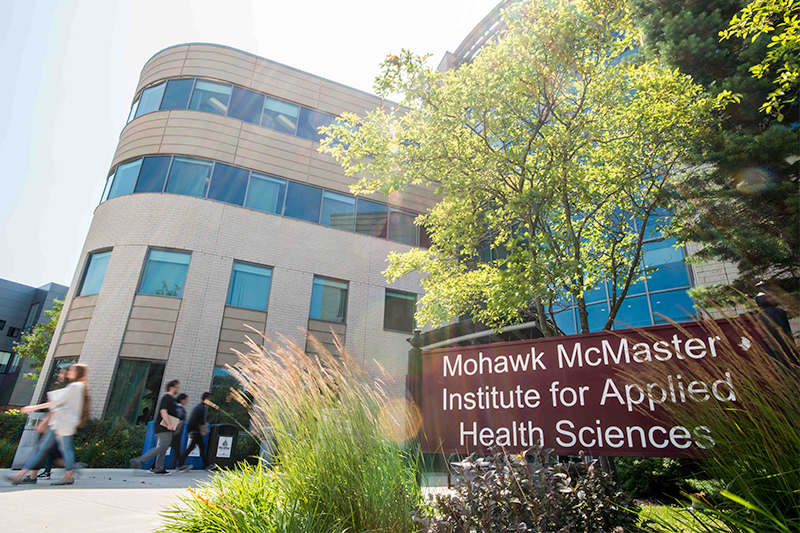
Discover the Institute for Applied Health Sciences at McMaster
The Institute for Applied Health Sciences (IAHS) is located in West Hamilton on the McMaster campus. The IAHS campus is where the majority (but not all) of our health programs are taught. Learn more about the IAHS:

We're here for you to support applications and admissions by providing online and virtual service.
General Inquiries
Please call (905) 575-1212.
Applied and have questions?
Email Admissions or Book an appointment in person or by phone.
Haven't applied and need help?
Email Recruitment or Book an appointment in person or by phone.
Applied as an international student?
Program Delivery
Learn about program delivery terms.
Please note: in-person, virtual, and hybrid classes vary according to the program and some programs may be in-person only. Refer to the Program Overview for more information.
Personalize your Mohawk experience
Explore programs, select your interest and create your custom viewbook. Get the information you want. Instant, online and delivered to your inbox.

Student stories
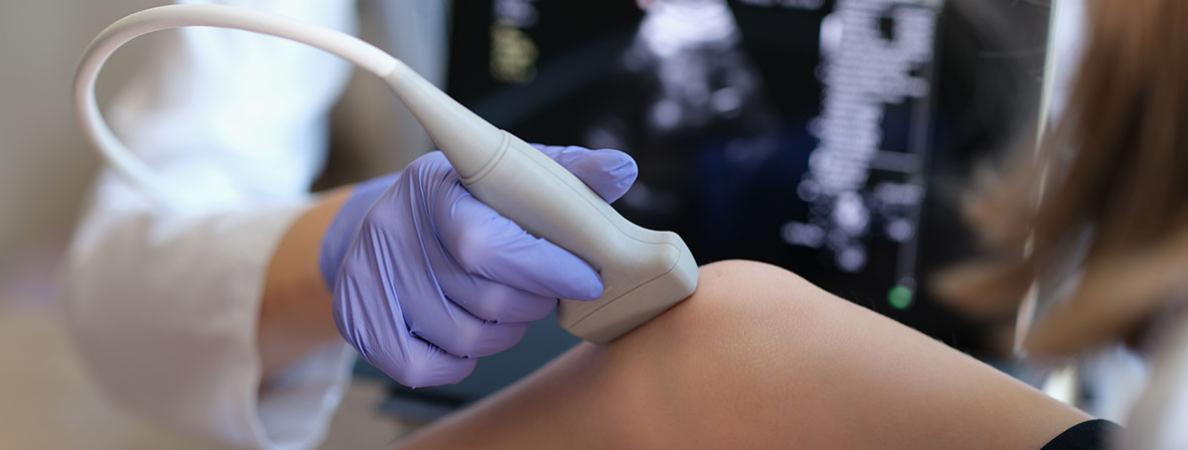
Is a career in sonography right for you? Your top questions answered.

How to choose: Medical Radiation Sciences (729) vs Radiography (740) or Sonography (750) Advanced Diplomas

Why study diagnostic imaging at Mohawk College?
Ready to apply?
If you are a Domestic or Canadian applicant, you can apply through the Ontario College Application System.
You are considered a Domestic applicant if you are a Canadian citizen or a permanent resident that resides inside or outside of Canada.

Contact us
Questions?
Contact the Registrar's Office at McMaster University:
Registrar's Office
McMaster University
Phone: 905-525-4600
Fax: 905-527-1105
Email: Contact McMaster
How to Apply
Apply to the Ontario Universities' Application Centre (opens new window)
