

Labs and Simulation Spaces
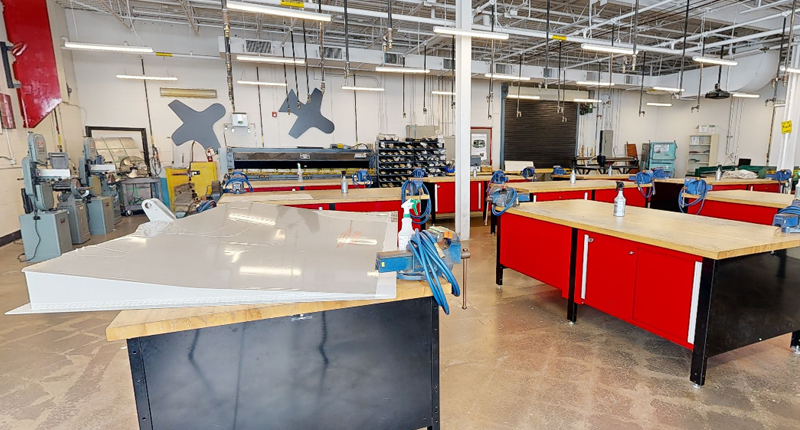
Aviation Structures Lab
In this lab students from all three aviation technician programs-Aircraft Maintenance Aircraft Structures and Avionics Maintenance-learn the hand skills required to maintain and repair aircraft metal structure. The skills taught in this lab prepare students to work in all areas of aviation: aircraft manufacturing, aircraft repair and overhaul.
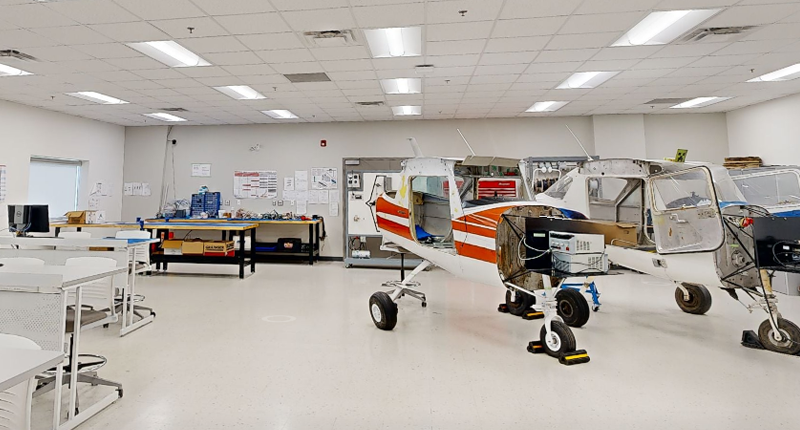
Avionics classroom
Avionics include the many electronic components used for communications, navigation and the display and management of multiple aircraft systems and functions—everything from a simple searchlight for a police helicopter to a complicated tactical system for an airborne early warning platform.
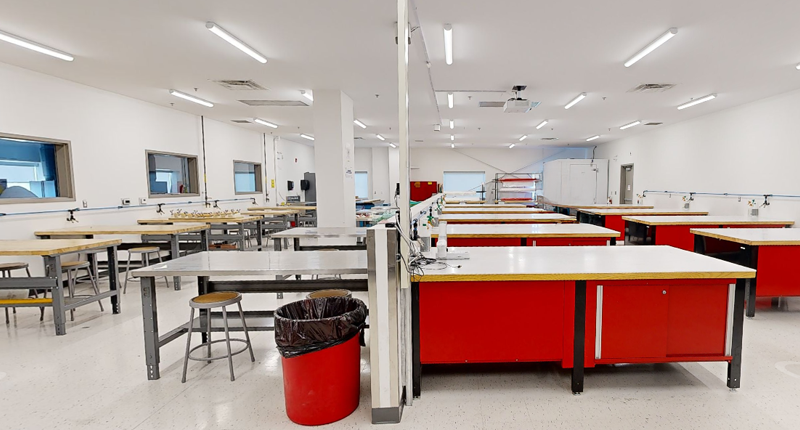
Composite Manufacturing Lab
With support from aerospace industrial partners, this lab provides students with the experience of an operational manufacturing plant.
Students from our Aviation Technician - Aircraft Maintenance and Aviation Technician - Aircraft Structures programs will use this lab to learn how to build aircraft parts. The lab focuses on composite materials, with full production control and quality assurance systems, teaching students to follow the best practices used by major companies.
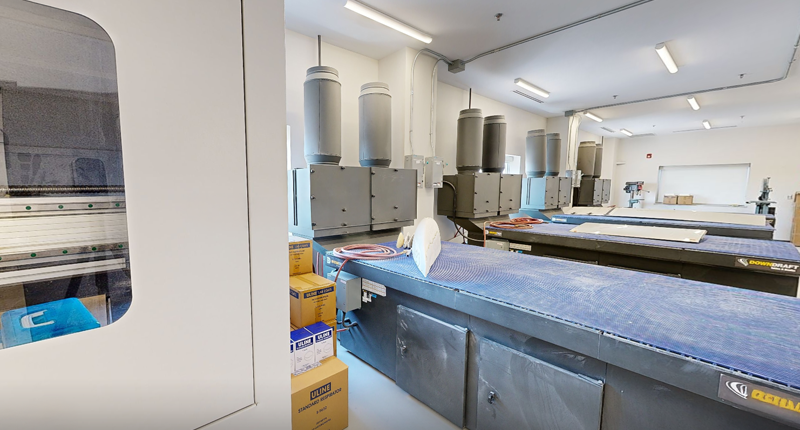
Dirty Room
Commonly referred to as the “Dirty Room,” this specialized workspace is designed for the fabrication and finishing of aircraft composite parts. It houses a CNC machine used to create molds and tooling essential for composite manufacturing. The room also accommodates grinding, sanding, and trimming operations, ensuring that all finishing tasks are performed in a controlled environment.
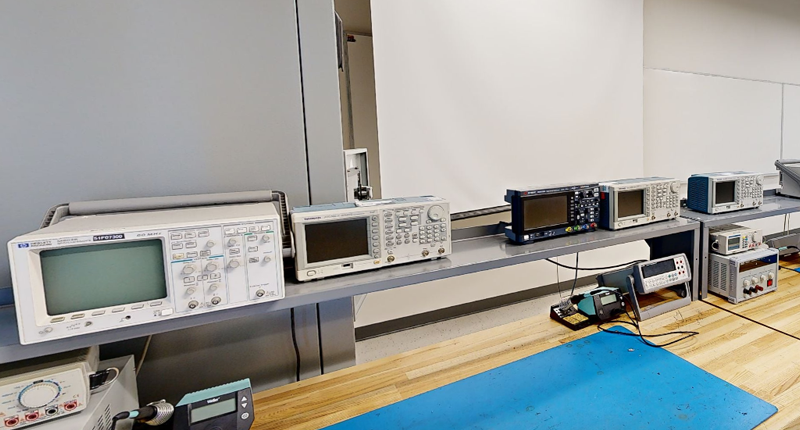
Electronics Lab (Airport)
First-year students from all three Mohawk aviation technician programs—Aircraft Maintenance, Aircraft Structures and Avionics Maintenance—will use this lab to learn basic electrical and electronic theory, providing them with fundamental hands-on skills in circuit diagnostics and repair.
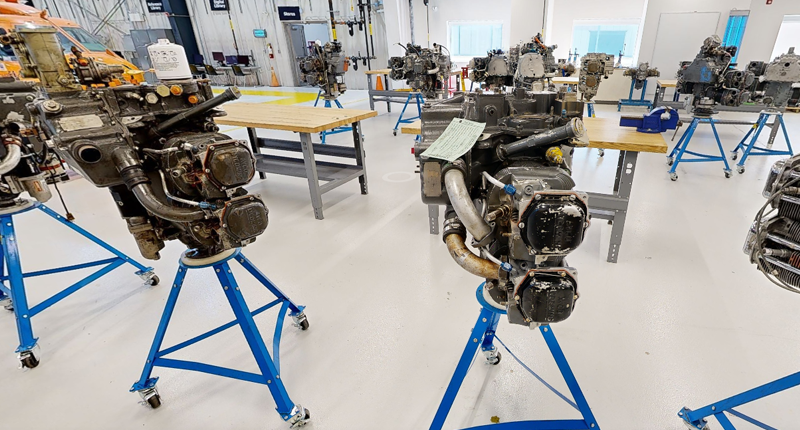
Reciprocating Engines Lab
A piston engine, also known as a reciprocating engine, uses heat from one or more reciprocating pistons to convert pressure into a rotating motion. This rotating motion turns the aircraft's propeller, allowing for flight.
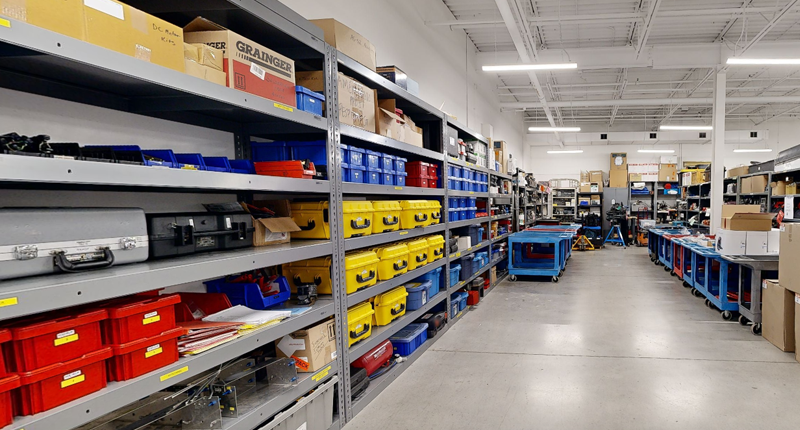
Stores
The Stores lab is where students learn about inventory management and parts identification from experienced faculty.
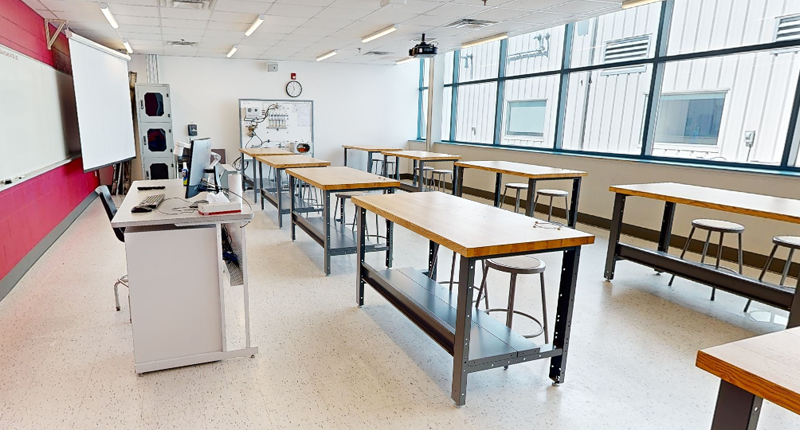
Systems Lab
In the Systems Lab, students gain hands-on experience with aircraft electrical, hydraulic, pneumatic, and control systems, learning how to inspect, troubleshoot, and maintain the complex systems found in modern aircraft.
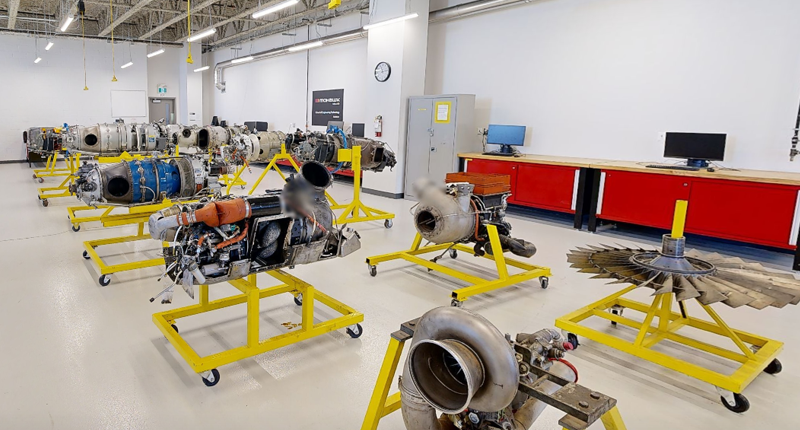
Turbine Engines Lab
A turbine engine uses pressurized air passed over blades, called turbines, to create the thrust used to move the aircraft. The engine is made in two basic sections: a gas generator with an accessory gearbox and a free power turbine with reduction gearbox. There are many variants of turbine engines used on planes, helicopters, land vehicles, boats and for industrial uses.
