

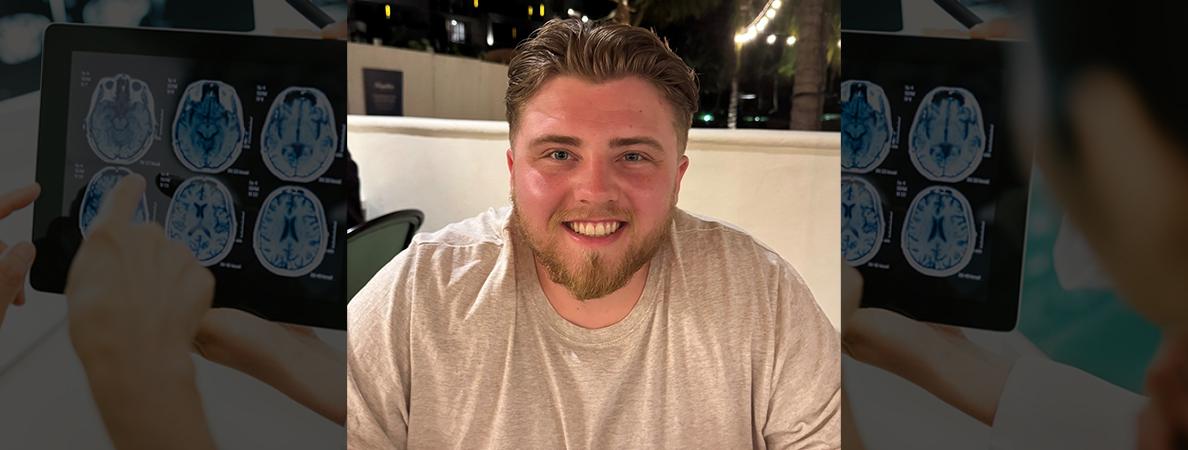
Chase studied Recreation Therapy at Mohawk and spent two years working in brain injury rehabilitation. He knew the kind of work he wanted to do: supporting athletes with mental health and brain injury recovery. What he needed was more specialized knowledge to get there.
So he added Mohawk’s Mental Health and Disability Management graduate certificate.
For Dr. Krissy Doyle-Thomas, a Professor and Academic and Field Placement Coordinator in Mohawk’s Department of Allied Health, that’s what pathways into our graduate certificates are for. “Very few people land in their ‘forever’ career on the first try,” she says. “And they shouldn’t have to leave Mohawk to figure out what comes next.”
Everything you need, without starting over
Students in programs like Early Childhood Education, Child and Youth Care and Recreation Therapy already have a strong foundation in working with people. Then placement shows them something more.
“Often, placement shows them that the people they support are navigating other challenges that compound their life experiences, including mental health challenges, disability, or brain-based conditions,” says Krissy. “Pathways into our programs give them an opportunity to go deeper with their diploma-based learning.”
Mohawk’s graduate certificates in Brain Disorders Management and Mental Health and Disability Management build on what students already know rather than asking them to start over. Diploma programs like Early Childhood Education, Child and Youth Care, Recreation Therapy, Social Service Worker, Occupational Therapist Assistant and Physiotherapist Assistant, and Office Administration - Health Services are a strong starting point for both certificates. And if you’re already working in a field that supports people with brain disorders, mental health challenges or disabilities, Prior Learning Assessment and Recognition (PLAR) may allow your experience to count toward your program. The goal is for students to build a complete skill set for the workplace without leaving the college.
Clarifying your path
For Chase, the certificate sharpened his direction. “In recent years there has been a massive increase in discussion and research on athlete mental health, especially when it comes to brain injuries,” he says. “Having my prior experience in brain injury rehab and going into the Mental Health and Disability Management program, I think it’s going to help me in my future career in sports.”
It’s personal for him, too. Chase played baseball as a catcher for about 11 years, so he understands the physical and mental toll of playing at a high level. He liked the variety of assignments, which let him apply what he learned in lectures, and the range of mental health and disability diagnoses the program covered.
His advice: “Ask as many questions as you can, and always continue learning.”
Where it comes together
Both certificates are two-semester, evening programs at Fennell Campus, so students can keep working while they study, and both end with a full-time field placement with community partners.
For Kaitlyn, who came to the Brain Disorders Management certificate after an undergraduate degree in psychology and neuroscience, placement was the most influential part. “It allowed me to transfer my knowledge from undergrad and this program and apply it to helping people with brain disorders directly,” she says. It confirmed her goal of practicing therapy with people living with brain disorders, and it was a stepping stone into the Master of Education in Counselling Psychology at OISE.
Placement can lead straight to work, too. Krissy says many students are hired out of placement, because community partners see the value in their training and how ready they are to contribute to their teams.
Ofure, a Mental Health and Disability Management graduate, was hired by Safe Harbours Family Treatment Homes, where she completed her placement. “The program prepared me for the workforce by giving me the knowledge, training and experience I needed to succeed in this industry,” she says. “Placement is its best feature. It’s a great way to gain practical training and experience.” She also points to a course that deepened her understanding of dual diagnosis and how to effectively support people living with both disability and mental illness.
Why this pathway makes better health professionals
Krissy also sees these pathways as a way to build stronger professionals.
“I’m a firm believer that pathways make better health professionals,” she says. “The people we serve don’t live their lives in program silos, and graduates who bring one discipline’s lens into another see the whole person and the whole system. That’s exactly what I believe employers would value.”
Whether you’re preparing to graduate or wondering how to upskill, Krissy’s advice is simple: “Ask about pathways while you’re still in your program. You don’t need the whole path mapped out, just the next step.”
Ready to take the next step? Learn more about Brain Disorders Management and Mental Health and Disability Management, including how to apply. For more information, contact Program Coordinator Krissy Doyle-Thomas at krissy.doyle-thomas [at] mohawkcollege.ca (krissy[dot]doyle-thomas[at]mohawkcollege[dot]ca) or 365-226-0230.