

Labs and Simulation Spaces
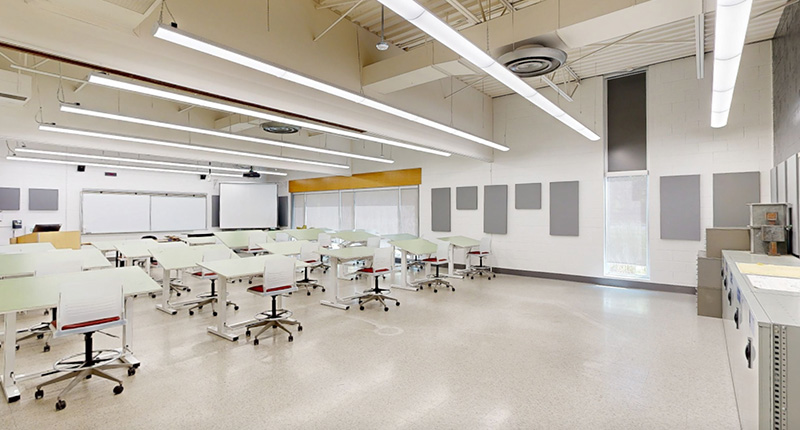
Drafting Lab
In the Drafting Lab, students develop the skills needed to read, create and interpret technical drawings used in the skilled trades. Working with industry-standard software and drafting tools, learners practice producing precise plans, layouts and schematics that reflect real construction and manufacturing requirements. The lab provides a hands-on environment where students refine their accuracy, attention to detail and understanding of design standards essential for success in trades and technical fields.
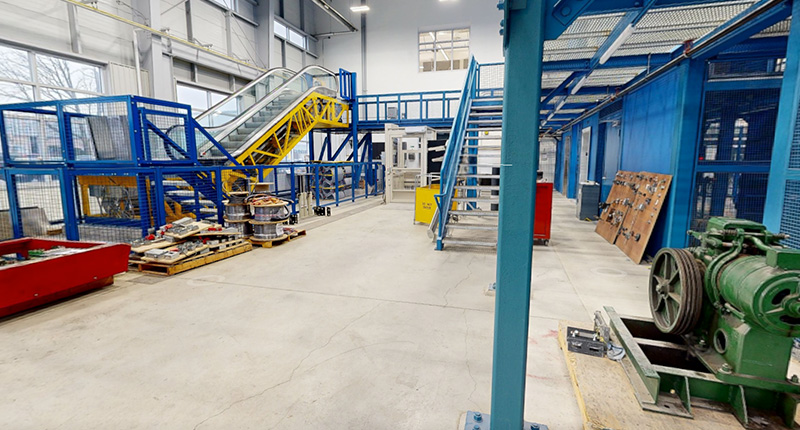
Elevating Device Lab
The Elevating Device Lab is equipped with a range of equipment commonly used by elevator mechanics in the field. In this lab, students engage in practical tasks that closely resemble those they will perform on job sites. This lab includes a traction elevator, a hydraulic elevator, two shafts for constructing various elevator components, a lift for individuals with disabilities, an escalator and various controllers designed to enhance troubleshooting skills.
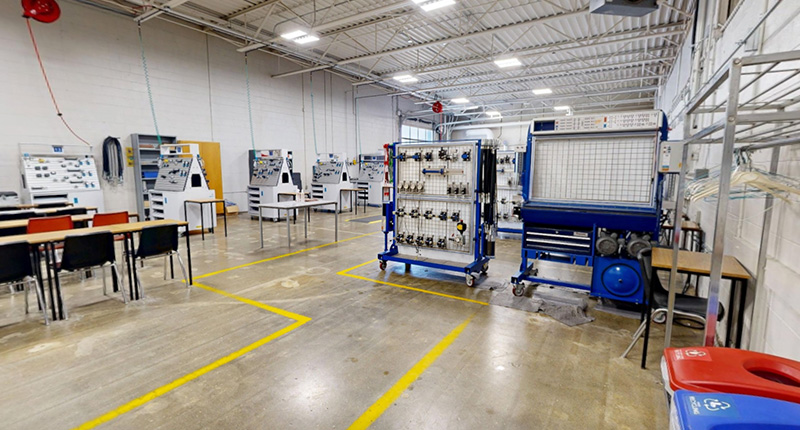
Hydraulics Lab
This lab introduces the principles of industrial hydraulics, including the design and application of power units, pumps, motors, conductors and fluids. Utilizing fluid power equipment, our students have the opportunity to do lab experiments with typical valving and accessories found in industry today. With a variety of applications, hydraulic systems are used in all kinds of large and small industrial settings, as well as buildings, construction equipment, and vehicles.
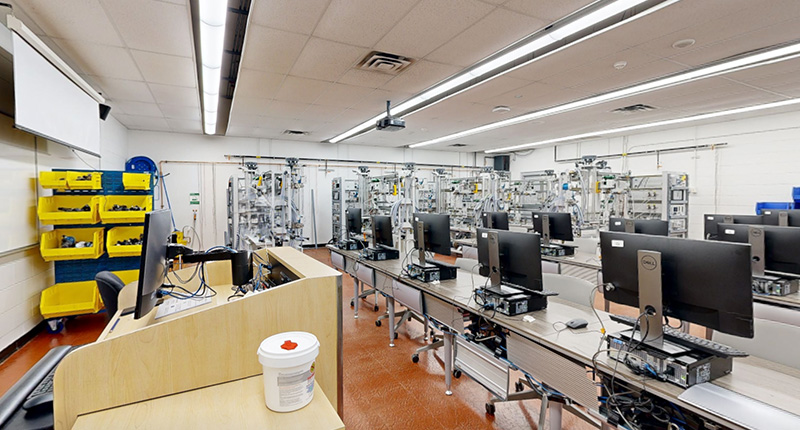
Instrumentation & Control Lab
In the Instrumentation and Control Lab students are taught how to install, maintain, calibrate, design and troubleshoot networking systems, process control equipment and environmental protection systems for a wide range of industrial applications.
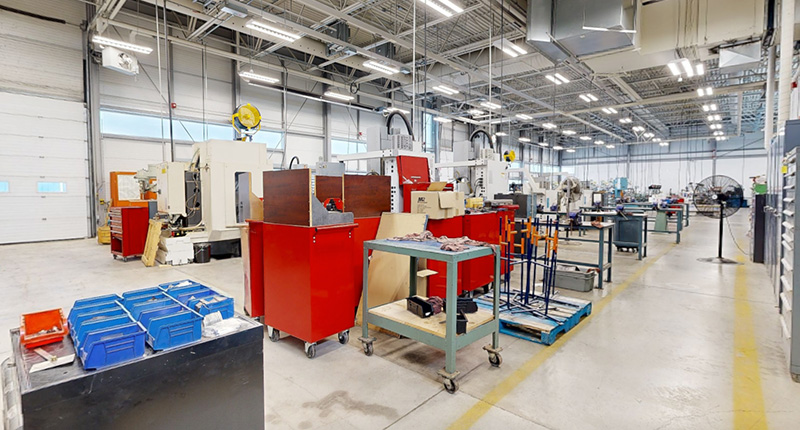
Machine Shop
General Machinists cut, shape and finish metal to produce precision machined parts and components used in all areas of manufacturing. Our students interpret engineering drawings (blueprints) and work process documents to set up machine lathes and mills to create precision machined parts and components. This process is carried out in tandem with measuring or inspecting work-in-progress using specialized precision tools and equipment
