

Labs and Simulation Spaces
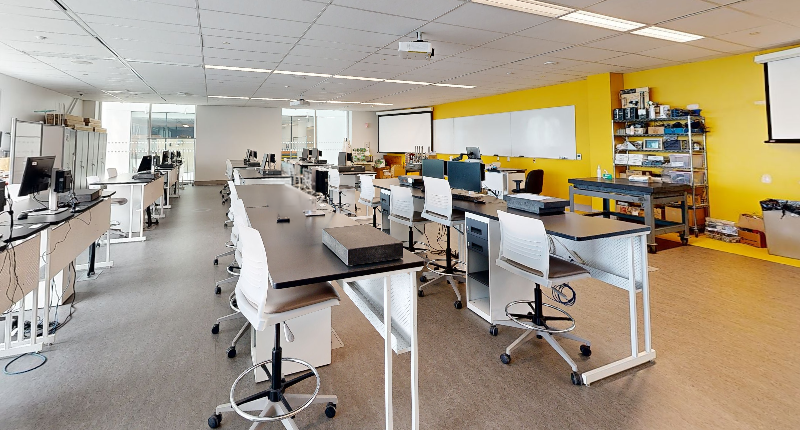
Physics and Metrology Lab
A precision measurement facility. Students use Coordinate Measuring Machines (CMM) and laser tools to learn "Quality Assessment and Control" protocols to ensure manufactured parts meet exact industrial tolerances.
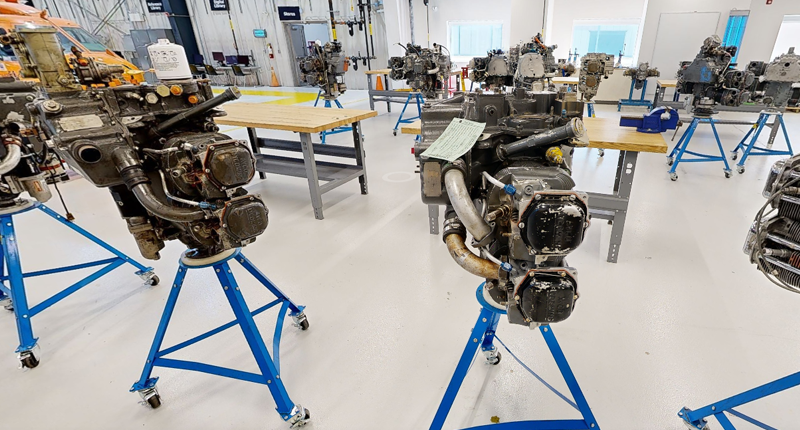
Reciprocating Engines Lab
A piston engine, also known as a reciprocating engine, uses heat from one or more reciprocating pistons to convert pressure into a rotating motion. This rotating motion turns the aircraft's propeller, allowing for flight.
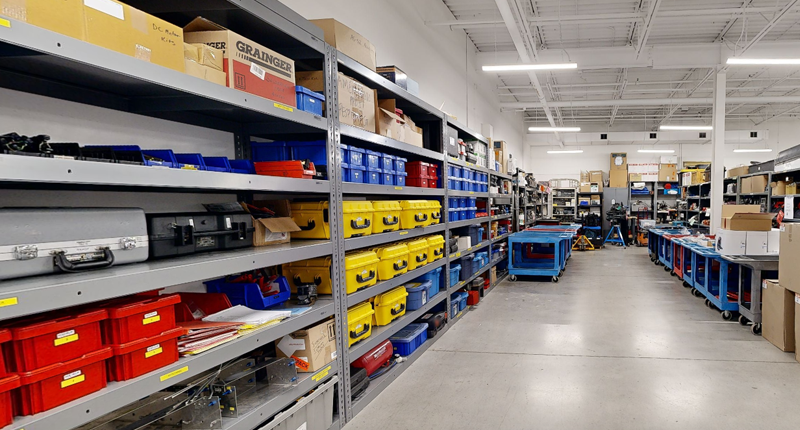
Stores
The Stores lab is where students learn about inventory management and parts identification from experienced faculty.
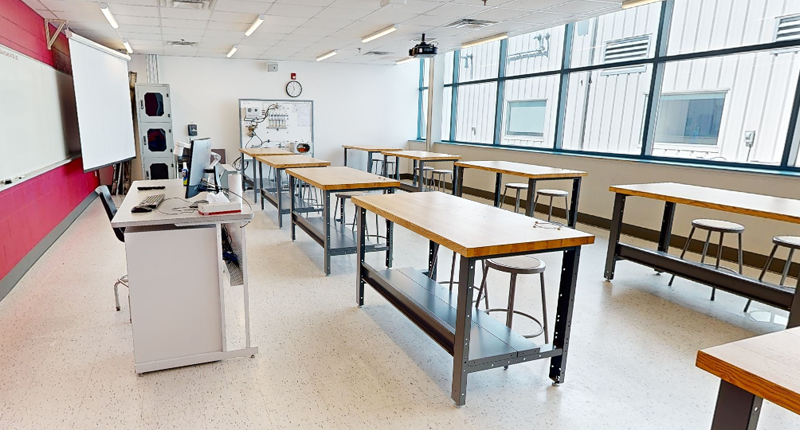
Systems Lab
In the Systems Lab, students gain hands-on experience with aircraft electrical, hydraulic, pneumatic, and control systems, learning how to inspect, troubleshoot, and maintain the complex systems found in modern aircraft.
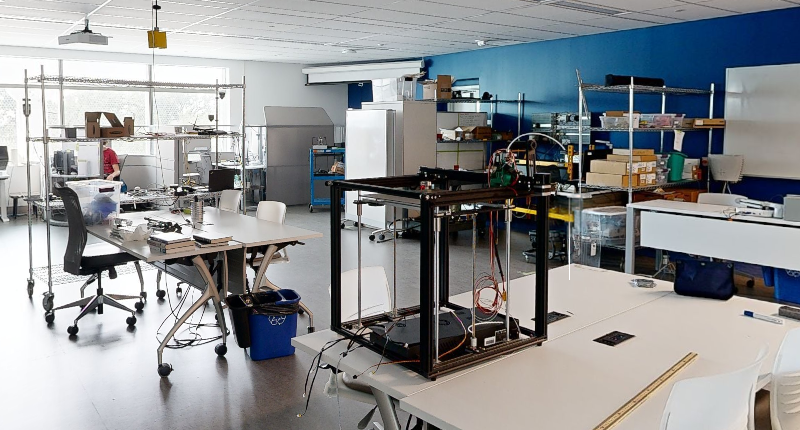
Technology Automation Lab
The hub for Industry 4.0. It features PLCs (Programmable Logic Controllers), sensors, and actuators. Students learn to program automated assembly lines and integrate robotic arms.
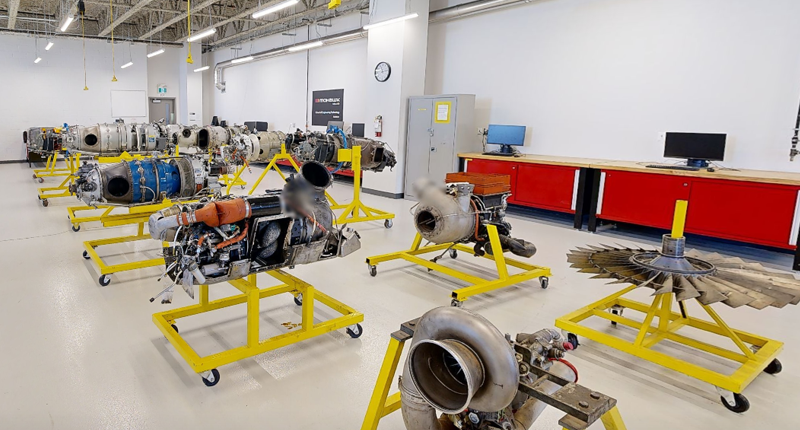
Turbine Engines Lab
A turbine engine uses pressurized air passed over blades, called turbines, to create the thrust used to move the aircraft. The engine is made in two basic sections: a gas generator with an accessory gearbox and a free power turbine with reduction gearbox. There are many variants of turbine engines used on planes, helicopters, land vehicles, boats and for industrial uses.
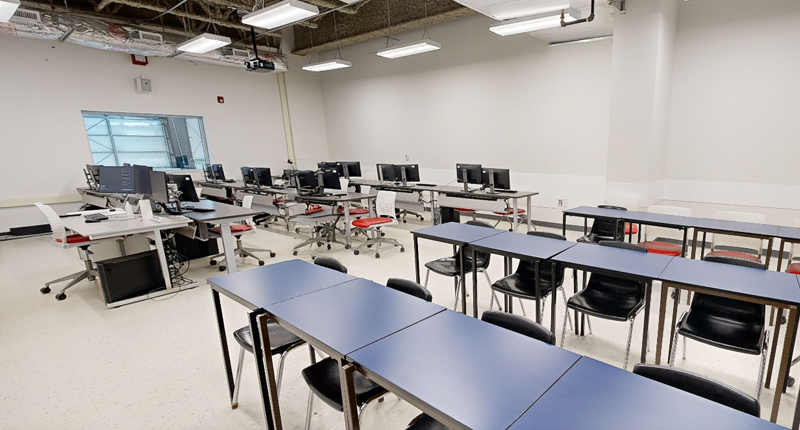
Virtual Maintenance Lab
Students from all three Mohawk aviation technician programs—Aircraft Maintenance, Aircraft Structures and Avionics Maintenance—will use this computer lab to learn how to navigate aircraft maintenance manuals and reports.
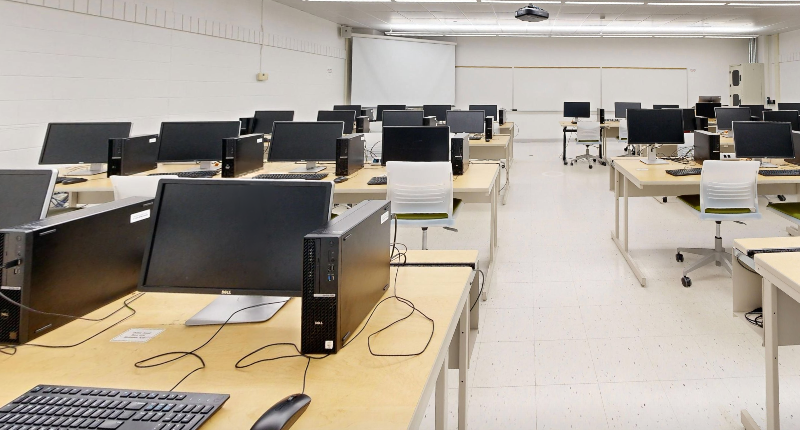
WiFi - Network & Hardware Lab
The WiFi – Network & Hardware Lab gives students practical experience with computer networks and IT hardware. Students learn to install, configure, and troubleshoot networking equipment, wireless systems, and computer components. Hands-on activities build the technical skills needed to support and maintain modern networked environments.
