

While other kids played video games or built Lego models, Tamiah spent her childhood examining acorns, sticks and other discoveries in the forest behind her grandmother’s house. At 10, a trip to Western Canada deepened her curiosity about the environment. But what transformed that curiosity into purpose was seeing her own family’s experience during hurricane season in Grenada, and learning how climate change can intensify these storms.
In high school, despite her desire to fight the climate crisis, Tamiah felt uncertain about her future and struggled with her grades. She kept returning to a quote she once heard: if you find a job connected to something you’re passionate about, you’ll never feel like you’re working. The environment immediately came to mind, but the only path she knew seemed to require a university degree.
Still, Tamiah wasn’t ready to give up on turning her passion into a career. After a gap year, she began to research her options. That’s when she discovered Mohawk College’s Environmental Technician program. Once she realized there was more than one route into the field, she took an enterprising leap forward.
“My experience at Mohawk College has helped me better understand and strengthen my passion for the environment,” she says. “I really appreciate how Mohawk focuses on preparing students for the workplace, and having a co-op opportunity is such a bonus.”
Applying industry-led learning
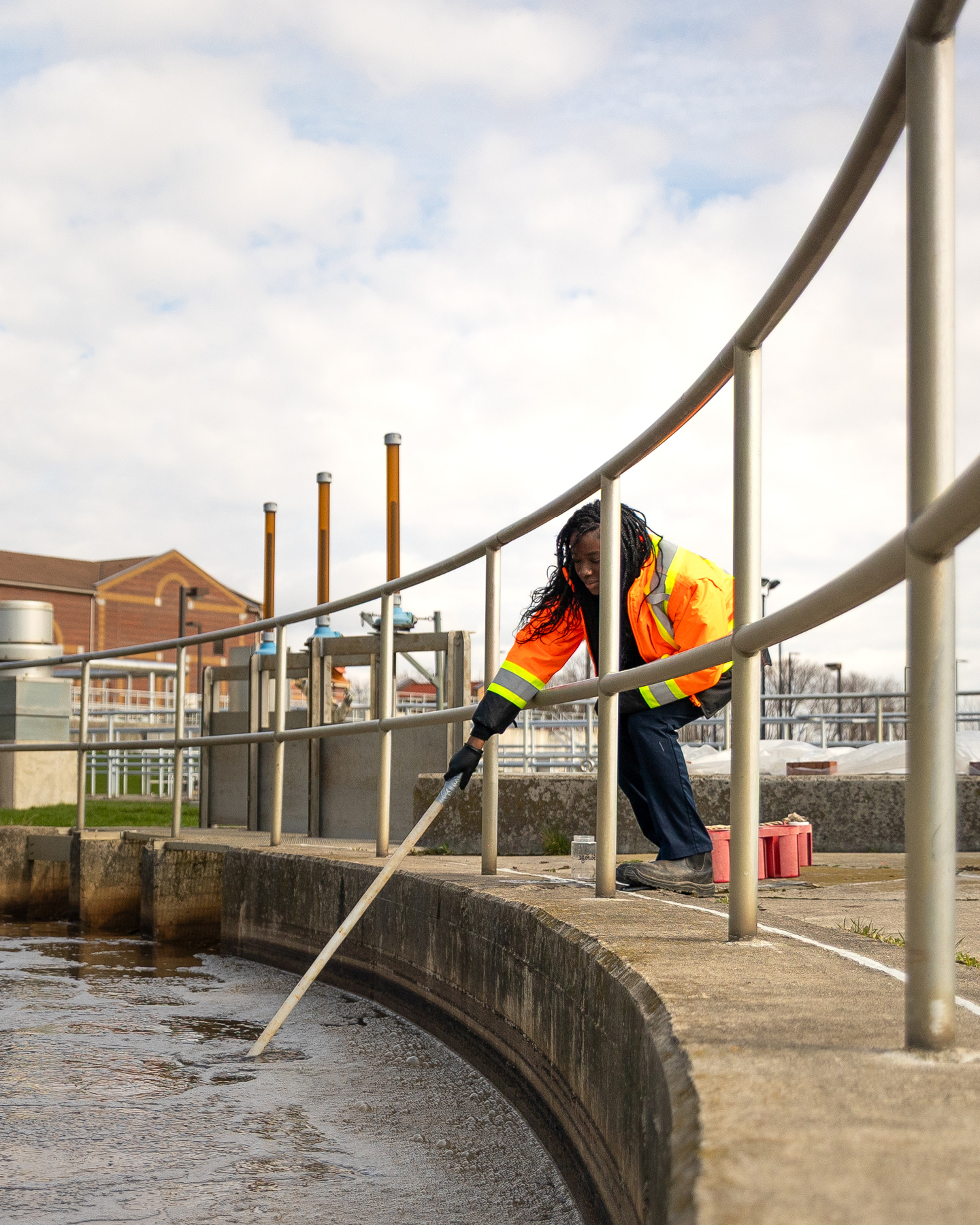
Today, Tamiah is building her future one sample at a time. She’s a co-op student at a Halton Region wastewater treatment plant, where she collects and tests water samples for ammonia, suspended solids and other indicators that help ensure water quality. After her one-year co-op, Tamiah will be prepared to earn her Class 1 Wastewater Treatment licence, allowing her to operate different wastewater systems.
“It kind of feels surreal in a way because if I'd known in high school that I would be working in a wastewater plant in three years, I would have been like, ‘What? That doesn’t sound like something I would even know about!’. There’s so much I’ve learned in the last two years at Mohawk College that just amazes me.”
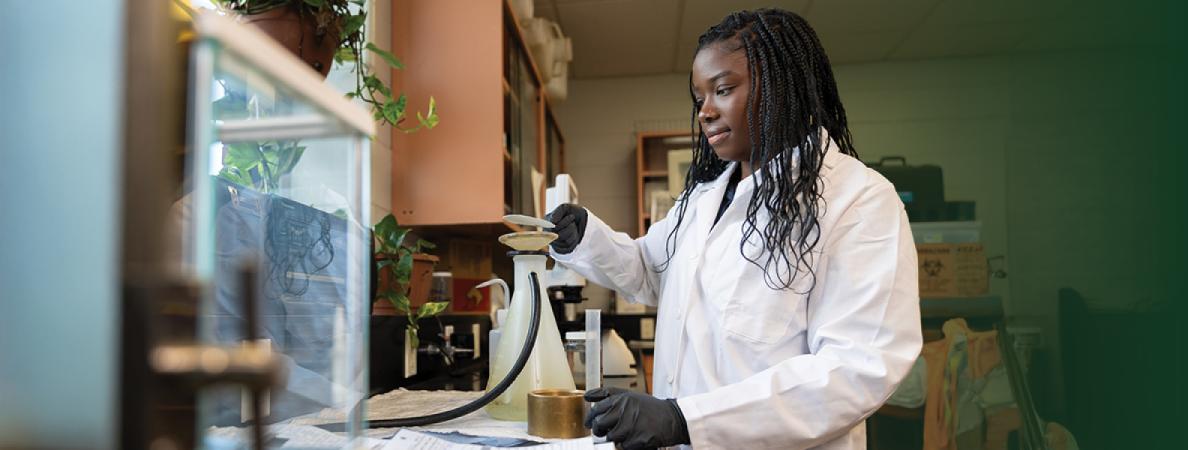
Much of that preparation comes from Mohawk College’s Environmental Technician program, which is known for its strong co-op and graduate placement rates. The program combines classroom theory with hands-on lab work. It covers everything from climate change science and environmental sampling to remediation methods and technologies, including Geographic Information Systems (GIS), remote sensing and drones.
“I really like learning at Mohawk because everything that I do at my co-op, I’ve learned all these different steps in my lab at Mohawk,” Tamiah says. “So, when I do a suspended solids test or ammonia test, we’ve had different labs at school dedicated to each of the tests so that’s what gave me the extra confidence to not feel so nervous because I already felt prepared.”
Embracing opportunities
Beyond the classroom, Tamiah also gained confidence through Mohawk College’s co-op support systems. A first-semester co-op preparation course took the guesswork out of professional communication, like writing emails. CareerReady, the college’s internal portal that connects students with industry opportunities, helped Tamiah discover positions that weren’t publicly advertised. It’s where she found her co-op.
“Starting in a career in a role where I’m learning so many different things has prepared me for my next step in my career, and I wouldn’t be able to get that training and education without CareerReady,” Tamiah says. “My employers are teaching me so many different things … not just about work itself, but life skills.”
Having found her direction, Tamiah is now building her future with intention and a sense of exploration. With the program’s broad range of industry topics and learning outcomes, she feels confident about the diverse paths open to her.
Tamiah also encourages others to tap into their enterprising spirit.
“I hope my story can inspire others who care about the environment to see that you’re not limited to just one direction,” Tamiah says. “I also hope it shows that if you’ve ever felt lost, like I did, that doesn’t mean you’ll stay that way. You can overcome it, discover what truly interests you, and build a future that fits who you are.”