

Did you know that patients who have positive experiences with a healthcare provider are more likely to have better health outcomes? At first, it might seem surprising. If the treatment plan is the same, why would the outcome be different?
The answer is simple: patients are people first. When someone feels respected and trusts their healthcare team, they’re more likely to follow treatment plans and ask questions.
Compassion is clinically necessary.
Can you teach compassion?
Compassion in healthcare looks different from everyday kindness. Healthcare professionals often see people on the best and worst days of their lives. For example, if you are a Radiography Technologist, broken bones become as routine as a phone notification. But for the person in front of you, that broken bone could mean fear and a huge life disruption.
The challenge for all healthcare workers is learning how to step back and remember the person behind the condition.
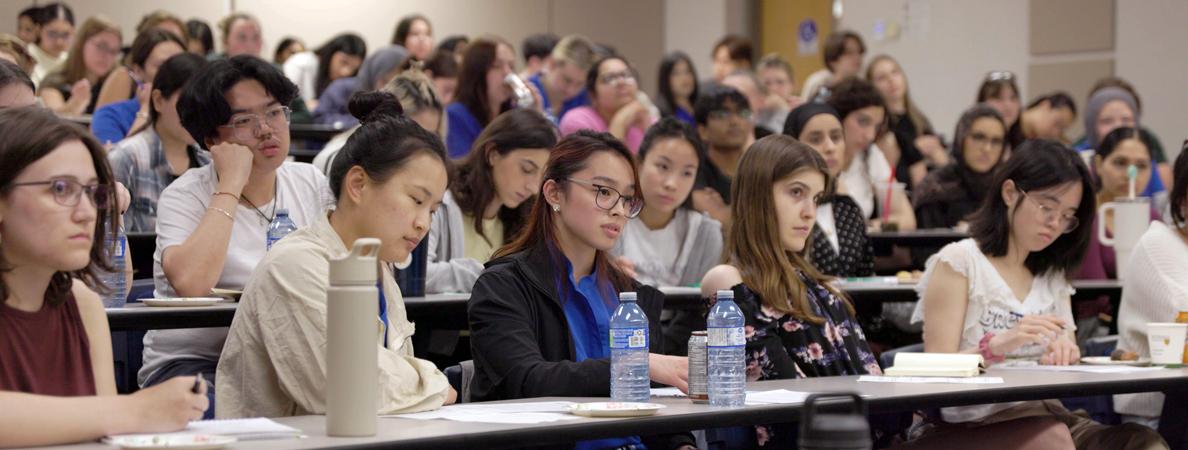
At Mohawk College we are helping to develop this skill through the Patient Partner Program, a unique initiative that brings patients and caregivers into the classroom to share their lived experiences. It helps students connect textbook knowledge to the human experiences of illnesses including fear and hope.
Learning through lived experience
As one student shared, “The Patient Partnership session was one of the most emotional and eye-opening experiences I’ve had in this program. It wasn’t a typical lecture. It was a conversation rooted in honesty, pain, love and strength.”
Another student reflected on a story that hit close to home. “As someone preparing to enter the healthcare field within the next year, I couldn’t help but imagine myself in her place.”
Faculty see firsthand how these stories shape more empathetic and capable professionals. One instructor explained, “We teach facts every single day, and students are experts at learning facts. But what we’ve realized is that they really learn from stories. They learn from empathetically connecting with other people. They learn so much more than you could ever expect from a textbook.”
Patients carry their history with them
As one student summarized, “Patients may look calm or quiet on the outside, but internally they are carrying so much.”
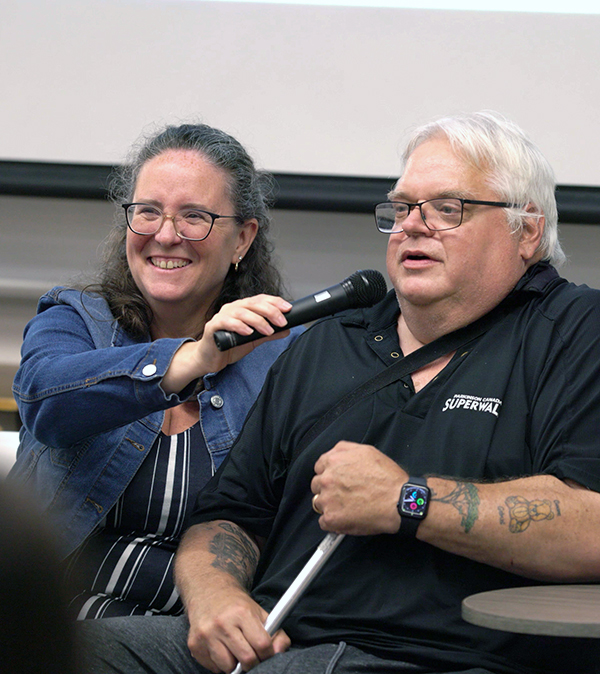
Students heard from John, a patient living with Parkinson’s disease, who explained how important it is to talk to future healthcare professionals who may not have met someone with his condition. By sharing his experience, he hopes to help future Parkinson’s patients receive more compassionate care.
What students remember
John’s story made a lasting impression on the students who heard it. He spoke about how his diagnosis impacted his dream of traveling to Alaska. This made one student realize “how fragile time really is, and how easily life plans can be interrupted by illness.” Another student added, “Behind every scan we perform is a person whose life may be shifting dramatically, often in ways we can’t see on the surface.”
Students also learned that compassionate care is not just about feelings. It involves listening carefully and gaining a practical understanding of each condition. John shared that telling someone with Parkinson’s to “stop shaking” is not only unhelpful, but deeply hurtful. Many students responded by committing to learning respectful and appropriate language so they can offer better, more inclusive care.
A lesson that will always be remembered
To quote John, “Don’t let your bad day become their bad day.” Through the Patient Partner Program, students are learning that compassion is not an extra step, it’s an essential part of the job.
The best healthcare begins with seeing the person in front of you. Open conversations like these have a lasting impact on our students. They leave the lecture hall with a new perspective and a commitment to do better.
Want to make an impact?
Mohawk College’s Patient Partner Program aims to build a community of patients and family caregivers with unique experience and knowledge (gained through living with a condition or illness, receiving treatment or supporting a loved one) who are interested in sharing their perspectives to improve the way we deliver healthcare education.
Learn more about how you can make a difference in healthcare education.