

If you have any General Education concerns that are not addressed here, or if you would like further information regarding General Education Electives at Mohawk College, you can contact the General Education Coordinator, Kimberly Costello, at gened [at] mohawkcollege.ca (gened[at]mohawkcollege[dot]ca).
What are General Education courses?
General Education is a mandatory component of Diploma programs in Ontario. General Education courses are meant to broaden your education beyond the vocational learning outcomes for your program of study. By taking General Education courses it is hoped that you will develop greater self-awareness, become more knowledgeable about the diverse world around you, and better equipped to make thoughtful, creative, and positive contributions to the society in which you live and work. General Education courses are also designed to strengthen your critical thinking, problem solving, and communication skills, all of which are highly desired by employers and essential for success in the workplace and life in general.
The Liberal Studies department offers a variety of interesting General Education Electives each semester. Our General Education courses cover topics of broad personal or societal importance, and support learning in one or more of the General Education Themes, as defined by the Ministry of Colleges and Universities (Frameworks for Programs of Instruction, 2009).
General Education Themes
Arts in Society
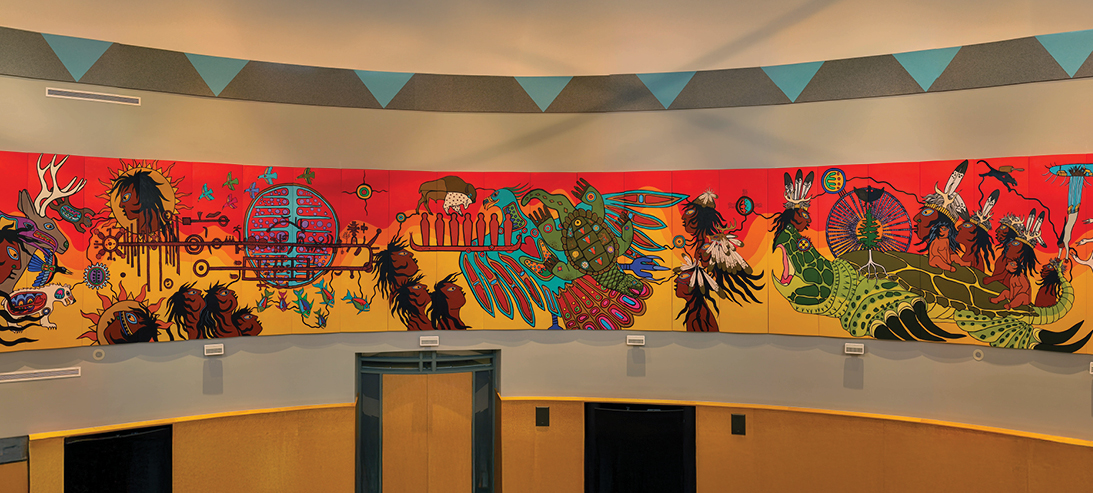
The capacity of a person to recognize and evaluate artistic and creative achievements is useful in many aspects of their life. Since artistic expression is a fundamentally human activity, which both reflects and anticipates developments in the larger culture, its study will enhance the student’s cultural and self-awareness. Courses in this theme provide students with an understanding of the importance of visual and creative arts in human affairs, of the artist’s and writer’s perceptions of the world and the means by which those perceptions are translated into the language of literature and artistic expression.
Civic Life
In order for individuals to live responsibly and to reach their potential as individuals and as citizens of society, they need to understand the patterns of human relationships that underlie the orderly interactions of a society's various structural units. Informed people will have knowledge of the meaning of civic life in relation to diverse communities at the local, national, and global level, and an awareness of international issues and Canada’s place in the international community. Courses in this theme provide students with an understanding of the meaning of freedoms, rights, and participation in community and public life, in addition to a working knowledge of the structure and function of various levels of government in Canada and/or in an international context. They may also provide an historical understanding of major political issues affecting relations between the various levels of government in Canada and their constituents.
Social & Cultural Understanding
Knowledge of the patterns and precedents of the past provide the means for a person to gain an awareness of his or her place in contemporary culture and society. In addition to this awareness, students will acquire a sense of the main currents of their culture and that of other cultures over an extended period to link personal history to the broader study of culture. Courses in this theme deal broadly with major social and cultural themes. These courses may also stress the nature and validity of historical evidence and the variety of historical interpretation of events. Courses will provide the students with a view and understanding of the impact of cultural, social, ethnic, or linguistic characteristics.
Personal Understanding
Educated people are equipped for life-long understanding and development of themselves as integrated physiological and psychological entities. They are aware of the ideal need to be fully functioning persons: mentally, physically, emotionally, socially, spiritually, and vocationally. Courses in this theme focus on understanding the individual: his or her evolution; situation; relationship with others; place in the environment and universe; achievements and problems; and their meaning and purpose. They will also allow students the opportunity to study institutionalized human social behaviour in a systematic way. Courses fulfilling this requirement may be oriented to the study of the individual within a variety of contexts.
Science & Technology
Matter and energy are universal concepts in science, forming a basis for understanding the interactions that occur in living and non-living systems in our universe. Study in this area provides an understanding of the behaviour of matter that provides a foundation for further scientific study and the creation of broader understanding about natural phenomena. Similarly, the various applications and developments in technology have an increasing impact on all aspects of human endeavour and have numerous social, economic, and philosophical implications. Courses in this area should stress scientific inquiry and deal with basic or fundamental questions of science rather than applied ones. They may be formulated from traditional basic courses in such areas of study as: biology, chemistry, physics, astronomy, geology. As well, courses may be related to understanding the role and functions of technologies in a non-applied manner to provide students with an opportunity to explore the impact of these concepts and practices on their lives.
Current List of General Education Electives
Below is a list of courses that may be offered as General Education Electives to full-time students throughout the 2025-2026 academic year. Please note that course offerings are subject to change, and some courses are not eligible as electives for all programs. View program restrictions for the current academic year.
| ANTR 10000 | Plagues and People: History of Disease |
| ANTR 10006 | Humankind: Origins, Beliefs, and Behaviour |
| EDIS 10000 | Belonging: Equity, Inclusion & Diversity |
| GNED 10000 | Sports Stories |
| GNED 10004 | Art and Activism |
| GNED 10005 | Exploring Anatomy & Physiology |
| GNED 10006 | Sci-fi, Horror and Fantasy |
| GNED 10008 | Building Global Skills |
| HIST 10010 | History: Myth & Reality |
| HIST 10020 | History of War and Society: 20th Century |
| HIST 10033 | The Story of Art Through the Ages |
| INDS 10030 | First Nations, Metis, and Inuit Perspectives |
| INDS 10032 | Indigenous Peoples Evolving Media & Artistic Images |
| INDS 10034 | Indigenous Wholistic Practices |
| LITR 10001 | Movies, Identity & Culture |
| LITR 10002 | Crime Fiction |
| MCOM 10429 | Creativity & Wellbeing |
| PSYC 10015 | Human Sexuality |
| PSYC 10028 | Positive Psychology |
| PSYC SS156 | Introduction to Psychology |
| PSYC SS271 | Developmental Psychology |
| SSCI 10037 | Environmental Sustainability |
| SSCI 10076 | Drugs, Behaviour & Society |
| SSCI 10079 | Digital Thinking & Innovative Design |
| SSCI 10080 | Self and Society |
| SSCI 10090 | Creating Sustainable Cities |
| SSCI 10091 | Global Issues |
| SSCI 10092 | Your Voice Matters: Power & Influence in Canadian Democracy |
| SSCI 10093 | Success in the Global Workplace |
| SSCI SS108 | Introduction to Sociology |
| SSCI SS299 | Society, Technology and Social Issues |
| SSCI 10084 | Digital Wellness |
General Education FAQ
How many general education electives do I need to take?
Most diploma programs at Mohawk College require students to complete two or three General Education Electives. To see how many are required for your program, check your MAP (My Academic Progress), which shows your full program of study—including completed, in-progress, and remaining courses. You can access MAP through MyMohawk → Academics → My Grades → My Academic Progress (MAP).
Which semester do I to take my general education elective(s)?
Each program schedules General Education Electives in specific semesters. To find out when you're required to take them, review your program of study in MAP (My Academic Progress). It is strongly recommended that you take your Elective in the semester it's scheduled for your program.
Which courses can I chose for my general education elective(s)?
The Department of Liberal Studies offers a variety of engaging General Education Electives each semester. You can view the list of courses available to full-time students here on the General Education page under "Current List of General Education Electives". Please note that course offerings change each semester, and some courses may not be eligible as Electives for all programs.
How do I register for my general education elective?
If a General Education Elective is scheduled for your current semester, you will select it while registering for your courses on MyMohawk → Registration→ Choose or change my timetable. Below your required courses, you’ll see a customized list of Elective options tailored to your program and timetable.
Does my program affect which general education elective I can take?
General Education Electives must be clearly different from the vocational outcomes of your program. This means some courses aren’t eligible as Electives for every program. When registering for a regularly scheduled Elective on MyMohawk, you will only see Electives approved for your program. If you choose an Elective off-cycle, it’s your responsibility to check the Elective – Program Restrictions to confirm the course is eligible as an elective for your program.
What if the general education elective I want to take is full?
General Education course registration is first-come, first-served, so it’s important to register as soon as your program's registration time begins (check MyMohawk → Registration → Find out when to register). Upon selecting your courses, if your preferred Elective is full, you must choose a different available option. However, you can continue checking “Choose or Change My Timetable” during the add/drop period for openings.
What if ALL the options in my elective block are full?
Due to staggered registration, elective seats are released gradually to give all students a fair opportunity to choose their courses. If all the options in your elective block are full, keep checking “Choose or Change My Timetable” regularly, as more seats may become available over time. You can also contact gened [at] mohawkcollege.ca (gened[at]mohawkcollege[dot]ca) to inform us about the issue with your full elective block.
How do I drop or change my general education elective?
You can drop, change, or add a General Education Elective through Choose/Change My Timetable in MyMohawk up until the 10th day of the semester (the end of the add/drop period). After this deadline, you can still withdraw from your elective via MyMohawk (check Academic and Important Dates for the "Last Day to Withdraw Without Academic Penalty"), BUT you can no longer make changes to your General Education Elective selection.
How do I register for a missed/ failed elective from a previous semester?
If you’re in a full-time program and have missed, failed, or dropped a General Education Elective in a previous semester, you may request special authorization to take it off-cycle (if space is available). To do so, complete the Elective Request Form, which will be posted on the General Education webpage before each semester. After you submit the form, the General Education Coordinator will add elective options to your registration page based on your program, timetable, and seat availability. You can then register for an elective in MyMohawk once the add/drop period begins. In some cases, you may be able to self-register for a missed/failed elective during the add/drop period if you see a list of “Missed/Failed Courses” in your registration portal. If you choose an elective from this block, be sure to review the Elective – Program Restrictions to confirm the course is eligible for your program.
Can I take a general education elective early?
You can request special authorization to take an elective early by completing the Elective Request Form, which will be posted on the General Education webpage before each semester. After you submit the form, the General Education Coordinator will add elective options to your registration page based on your program, timetable, and seat availability. You can then register for an electives in MyMohawk once the add/drop period begins.
Do general education electives count towards my GPA?
Yes, grades earned in your General Education Elective courses are included in the calculation of your overall Grade Point Average (GPA).
Can I take an extra general education elective to boost my GPA?
If you've already fulfilled the General Education requirements for your program, taking an extra Elective may not improve your GPA. Unless you're re-taking a previously completed Elective, additional Electives will appear under “Other Course Activity” and are not automatically included in your GPA calculation. Some academic areas may choose to manually count your highest Elective grade—even from “Other Course Activity”—but you’ll need to confirm this with your program area. If you're aiming to raise your GPA, re-taking a core program course is usually more effective. The higher grade will replace the lower one on your MAP and be included in your GPA.
Can I take an extra elective to achieve full-time status?
If you have already completed the General Education requirements for your program, you may request authorization to take an additional elective for the purpose of achieving full-time status. However, such requests will only be accommodated if space permits. To request special authorization, complete the Elective Request Form, which is posted on the General Education webpage prior to each semester.
Can I take my General Education Elective through Continuing Education?
Students who are enrolled in a full-time program are encouraged to take their General Education Electives as part of the regular program delivery. However, if you are interested in taking Electives through Continuing Education (CE), you can do so at your own expense (fees for these courses are NOT included in regular full-time tuition fees). Only courses on the CE General Education Electives list are accepted as credit towards the General Education requirements for most diploma programs. Before registering for a CE General Education course, please consult the Elective Program Restrictions list to ensure that the course is an appropriate Elective for your program. For all questions pertaining to the delivery and registration for Continuing Education courses you can contact CECreative [at] mohawkcollege.ca (CECreative[at]mohawkcollege[dot]ca).
Why isn’t the elective I took through CE showing on my MAP?
When you register for a course through Continuing Education (CE), it will appear on your MAP (My Academic Progress) under “Other Course Activity.” Once your final grade is posted, the credit is often automatically applied to one of your program General Education requirements. However, not all CE courses are automatically recognized as General Education credits. Some may require a General Education exemption to count toward your requirements. If your CE course does not appear under your General Education Requirement after your final grade is posted, contact the General Education Coordinator at gened [at] mohawkcollege.ca to request an exemption. Tip: Before registering, click the CE course title to check if it applies to all programs (no exemption needed), or if an exemption is required.
General Education Exemptions
Students who have previous learning experience and want to have that experience assessed for General Education exemption have two options:
- Students who have successfully completed a General Education course(s) at an accredited college/university can apply online for a General Education exemption/credit transfer. Please see General Education Exemptions FAQ for more information on the exemption process.
- Mohawk College also recognizes that not all education is gained through formal means, so If you have exceptional and potentially relevant work/life experience you may wish to explore the possibility of having your learning assessed through Prior Learning Assessment and Recognition (PLAR).
General Education Exemption FAQ
I’ve taken previous courses at Mohawk College; can I be exempted from taking my General Education Elective(s)?
Most General Education Electives taken at Mohawk college, will automatically transfer if you change from one Mohawk College program to another (or register in another Mohawk program after you have completed one). This means that most students who have already completed General Education Electives at Mohawk College are not required to apply for exemptions.
If you have previously completed General Education Electives at Mohawk College, please check your MAP (My Academic Progress) report through MyMohawk to see if your Electives have been applied to the General Education spaces for your current program of study. If your previously completed Electives are under the “Other Course Activity” section of the MAP report, contact gened [at] mohawkcollege.ca (gened[at]mohawkcollege[dot]ca) to inquire about the eligibility of your prior Mohawk College credits for General Education credit.
I’ve taken previous courses at another College/University; can I be exempted from taking my General Education Elective(s)?
If you previously completed courses at another post-secondary institution you might be eligible for exemption from one or more of your General Education Electives. There are several factors to consider when selecting a course to use for a General Education exemption request. To qualify for General Education credit, the transfer course must meet all the following requirements.
- The course must be awarded by an accredited post-secondary College/University.
- The course must support learning in one of the five General Education themes: Arts in Society, Civic Life, Social and Cultural Understanding, Personal Understanding, Understanding Science and Technology. Most courses in Humanities, Social Sciences, or introductory sciences qualify as General Education).
- The content of the course must be unrelated to the vocational outcomes or courses for the student’s program of study.
- Courses that focus on vocational, professional, technical, general interest or applied skills and knowledge do not qualify as General Education. This includes language, advanced science/math, computer, or applied arts courses, placement, practicum, or laboratory courses).
- The course must be a minimum of 3 credits or 42 contact hours
- The final grade on the official transcript must be 60% (C) or higher (50% for courses taken at Mohawk College). Courses with non-numerical grades or that are evaluated on a pass/fail basis are not eligible for Credit Transfer.
Note: To receive transfer credit/ exemption for a program mandated General Education course, the transferring course must match approximately 80% of the learning outcomes for the respective Mohawk College course.
I have real-world learning/experience that has taken place outside of a classroom; can I get General Education credit for that?
If you have work/life or educational experience that does not meet the criteria for credit transfer/ exemption, you may wish to explore the possibility of having your learning assessed through Prior Learning Assessment and Recognition. PLAR is available for most of our General Education courses. Please note that there is a non-refundable PLAR challenge fee. To obtain further assistance and information about PLAR, please contact the college’s Prior Learning Assessment and Recognition office at: plar [at] mohawkcollege.ca (plar[at]mohawkcollege[dot]ca)
How do I apply for a General Education Elective Exemption?
You can apply for a General Education Exemption online via MyMohawk. For step by step instructions please see: Apply for an Exemption in 5 Easy Steps. For General Education Exemptions, please select "General Education" when completing your request. For program mandatory gen-eds please select "Regular" course as the exemption type.
Note: Do not assume your application will be approved! If you are scheduled to take your General Education Elective, register and remain in your course until you are notified about the outcome of your request. If approved, your Elective will be automatically dropped from your timetable.
When should I submit my General Education exemption request(s)?
If you are not currently registered in an Elective and/or you are requesting an exemption for a General Education Elective that you are scheduled to take in a future semester, you can apply for the exemption(s) at any time. If you are trying to exempt from an Elective that you are currently registered in, your application should be received before classes begin in order to be processed before the drop deadline.
How soon will my application be processed?
Timelines can vary depending on the time of year; however, applications are normally assessed within 10 business days from the time the assessing Department receives your paperwork.
Do I need to register for a scheduled General Education Elective if I applied for an exemption?
Do not assume your exemption request will be approved! If you are scheduled to take your General Education Elective, register and remain in an Elective course until you have been notified about the outcome of your application. If your exemption request is approved, your Elective course will be dropped automatically from your timetable.
Can I apply for multiple General Education Elective exemptions at the same time?
Yes. Each credit sought through exemption requires its own Exemption Request form.
Do grades from course exemptions count towards my GPA (Grade Point Average)?
General Education Exemptions are represented as “E” on your transcript/MAP and are not calculated as part of your overall GPA.